Updated
Fine line tattoos do soften and fade faster than bold tattoos, because thin lines hold less ink and blur slightly as ink spreads under the skin over the years. A well-done fine line tattoo can still look lovely for a long time, especially if it’s not too tiny, it’s placed somewhere that doesn’t rub or get lots of sun, and you protect it with sunscreen. Expect to need a touch-up at some point, often within a few years.
Here’s what to know before you get one, from how they age to choosing the right artist.
Quick answer: Yes, fine line fades faster than bold work. Go a little bigger, avoid hands, feet and fingers, choose an experienced fine line artist, and use SPF on it for life.
In this guide
What is a fine line tattoo?
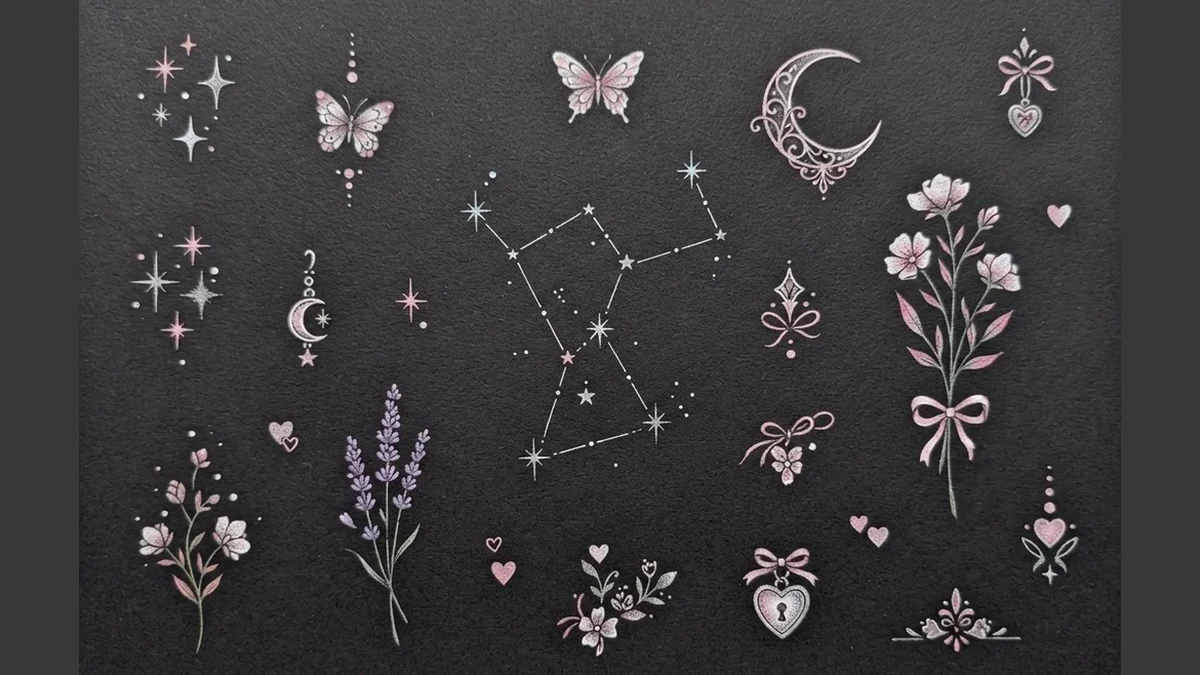
Fine line tattoos use very thin needles, often a single needle or a small group of three, to create delicate, detailed lines with little or no heavy shading. Popular designs include:
- small flowers and botanical stems
- tiny animals, butterflies and insects
- script and short words
- moons, stars and constellations
- minimalist line drawings and outlines
They’re popular for first tattoos because they look subtle and feminine, and they often hurt less because sessions are short.
Do fine line tattoos fade?
All tattoos change over time. Ink particles slowly spread under the skin, the body’s immune system clears a little ink, and sunlight breaks down pigment. With bold tattoos, there’s so much ink that this barely shows. With fine line work, there’s less ink to begin with, so:
- lines can blur and lose crispness over five to ten years
- tiny details can merge together, especially in very small designs
- light grey and colour fade first, while solid black holds best
- some lines may heal patchy and need a touch-up after the first heal
This doesn’t mean fine line tattoos are a bad choice. It means design, size and placement matter more than with bolder styles.
How to make a fine line tattoo last
- Go a little bigger. Giving lines space to breathe stops them blurring together. Ask your artist what minimum size they’d suggest.
- Keep the design simple. Fewer, cleaner lines age better than lots of tiny detail packed together.
- Choose placement carefully. See the table below.
- Pick an experienced fine line artist. Fine line is a specialist skill. Lines need to be deep enough to hold, but not so deep they blow out.
- Look after it while it heals. Don’t pick, and follow our tattoo aftercare guide.
- Use sunscreen for life. A high-SPF sunscreen on healed tattoos is the single best thing you can do. See our guide to tattoo sunscreen.
- Book a touch-up if any lines healed light. Many artists offer a free or cheap touch-up within a few months.
Best and worst placements for fine line
| Placement | How it holds up | Why |
|---|---|---|
| Inner forearm | Very well | Little rubbing, less sun when covered |
| Upper arm and shoulder | Very well | Stable skin, easy to cover |
| Back and spine | Well | Protected, though spine can be sore |
| Ribs and side | Well | Covered, but skin stretches with weight changes |
| Collarbone | Fairly well | Thin skin, some sun |
| Wrist | Fairly well | Lots of movement and washing |
| Behind the ear | Fairly well | Small space limits size |
| Fingers and hands | Poorly | Fast skin turnover, constant washing and rubbing |
| Feet and ankles | Poorly | Rubbing from socks and shoes |
| Lips and inside mouth | Very poorly | Often fades within months |
Pros and cons of fine line tattoos
| Pros | Cons |
|---|---|
| Delicate, subtle and elegant | Fade and blur faster than bold work |
| Often less painful, short sessions | Small, cheap-looking work is easy to get wrong |
| Easy to hide | May need touch-ups every few years |
| Great for first tattoos | Not every artist does them well |
| Can be very detailed | Harder to cover up or rework later if they blow out |
How much does a fine line tattoo cost in the UK?
Small fine line tattoos are often close to a studio’s minimum charge, which is commonly somewhere between £50 and £100 in the UK. Larger or more detailed pieces are usually priced by the hour or by the piece. Specialist fine line artists in big cities can charge more. See our full guide to how much a tattoo costs in the UK.
How to choose a fine line artist
- Look at healed work, not just fresh photos. Fresh fine line always looks perfect. Ask to see photos of tattoos that are at least six months to a year old.
- Check line quality. Lines should be smooth and even, without wobbles or blobs.
- Check they’re licensed. UK tattooists must be registered with their local council.
- Ask about touch-ups and what their policy is.
Our first tattoo tips cover more questions to ask before you book.
Frequently asked questions
How long do fine line tattoos last?
A fine line tattoo is permanent, but it will soften over time. Many look good for five to ten years or longer with good placement and sun protection, though some need touch-ups sooner.
Do fine line tattoos hurt less?
Often, yes, because sessions are short and there’s less shading. Placement matters more than style, though. See our tattoo pain chart.
What is a blowout?
A blowout is when ink spreads under the skin beyond the line, creating a blurry halo. It happens if the needle goes too deep, and it’s more noticeable with thin lines. Choosing an experienced artist lowers the risk.
Can fine line tattoos be touched up?
Yes. Artists can go over faded lines to make them crisper. Wait until the tattoo is fully healed first.
Are fine line tattoos good for a first tattoo?
They can be, as long as you choose a good size and placement and you’re happy that it may need a touch-up in future.